

Balsamic Vinaigrette
A low FODMAP balsamic vinaigrette of extra-virgin olive oil, balsamic vinegar, Dijon mustard, and maple syrup.
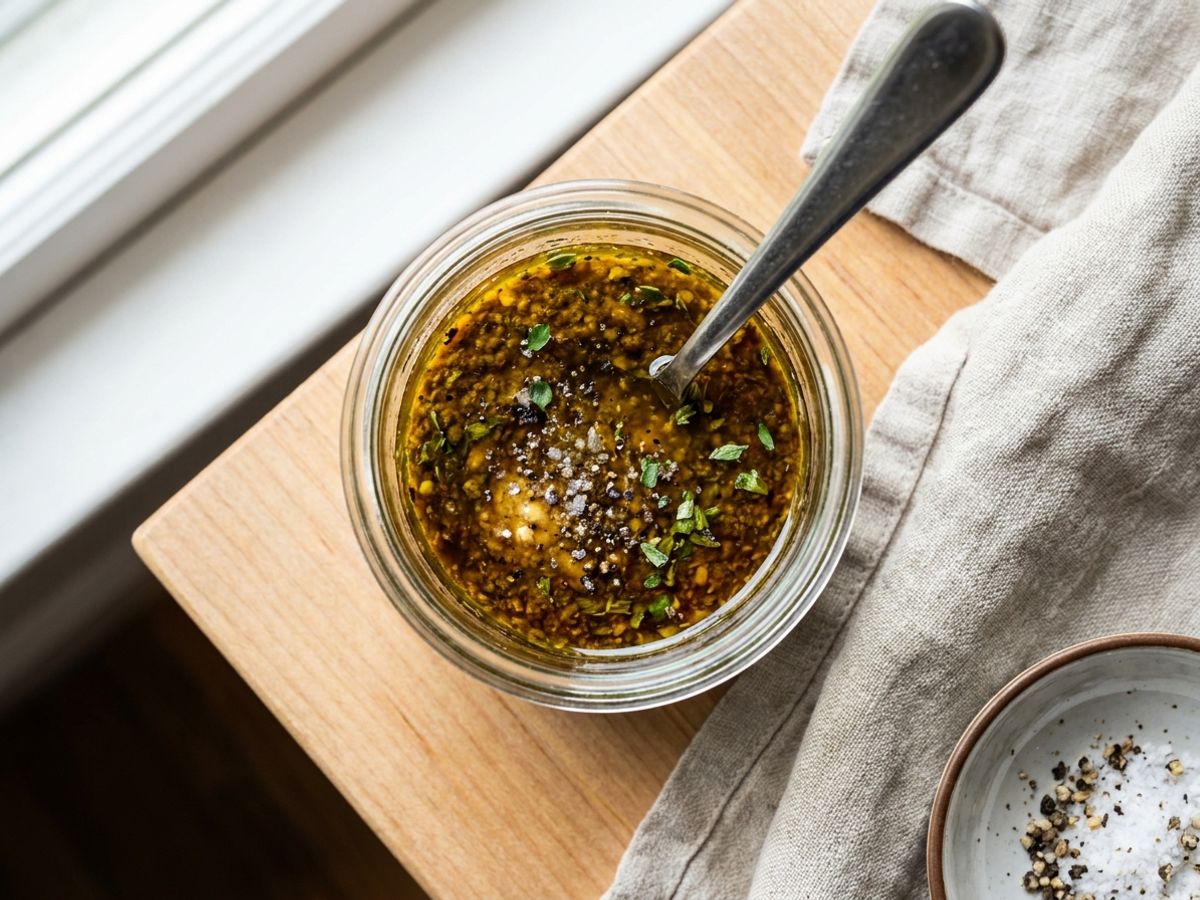
Ingredients
- 6 tablespoons extra-virgin olive oil
- 2 tablespoons balsamic vinegar
- 1 teaspoon Dijon mustard (plain, no garlic or honey)
- 1 teaspoon pure maple syrup
- 1/4 teaspoon fine salt, plus more to taste
- 1/8 teaspoon freshly ground black pepper
- Optional: 1/2 teaspoon chopped fresh oregano or thyme (with fresh herbs, keep the dressing up to 4 days)
- Optional: 1 teaspoon garlic-infused olive oil (swap for 1 teaspoon of the plain olive oil)
Instructions
Shake it together
- Add the balsamic vinegar, Dijon, maple syrup, salt, and pepper to a clean jar with a tight-fitting lid.
- Seal and shake for 10 seconds to dissolve the mustard and maple into the vinegar.
- Add the olive oil (and infused oil, if using), seal again, and shake hard for 20 to 30 seconds until the dressing thickens and looks glossy.
Taste and adjust
- Dip a lettuce leaf or clean spoon in and taste. If it's too sharp, add another 1/4 teaspoon of maple. If it's flat, add another pinch of salt.
- Stir in the fresh herbs if using.
Store
- Keep the jar in the fridge. Shake vigorously again before every pour; olive oil separates and partially solidifies when cold.
Tips & Substitutions
- Read the Dijon label. Most plain Dijons are just mustard seed, vinegar, water, and salt: all fine. Skip "garlic Dijon"; "honey Dijon" is fine at 1 teaspoon across 8 servings, but it is sweeter. Check the ingredients for onion powder or garlic powder, which show up in flavored varieties. Whole-grain mustard works too, as long as the label stays clean.
- Use real maple syrup, not pancake syrup. Pure maple is low-FODMAP at 1 tablespoon per serve. Most supermarket pancake syrups are high-fructose corn syrup, which is high-FODMAP and also tastes flat in a dressing.
- Add a garlic note with infused oil. Swap a teaspoon of the plain olive oil for garlic-infused olive oil if you want that savory edge. Fructans don't dissolve into oil, so the flavor carries without them. Use a commercial infused oil for this jar; homemade garlic oil has to stay refrigerated and be used within 4 days, which cuts the dressing's shelf life to match.
- Herb it up. A half teaspoon of chopped fresh oregano, thyme, or basil turns this into an Italian-leaning dressing. Dried herbs work at half the quantity.
- Don't reach for balsamic glaze. Commercial balsamic glazes are reduced balsamic plus added sugar or, often, garlic, onion, or fig; check the label before assuming it's safe.
- Whisk, blender, or jar. A jar is fastest and stores the dressing in the same container. A small blender or immersion blender gives you a thicker, creamier emulsion that clings better to sturdy greens.
 Join the waitlist
We're building a Low FODMAP Recipes app. Add your email and we'll let you know when it launches.
Why This Works
Balsamic vinegar at a measured serve. Monash lists balsamic vinegar as low at about 1¾ tablespoons (35mL) per serve. Above that, the naturally concentrated fructose starts to add up. This recipe uses 2 tablespoons divided across 8 servings, which works out to about 3/4 teaspoon of vinegar per serving; well under the 1¾ tablespoon ceiling. A generous 2 tablespoon pour of finished dressing carries about 1 1/2 teaspoons of balsamic, still well under the tested serve.
Maple syrup, not honey. Honey is low FODMAP only at about ½ teaspoon (4g), with excess fructose and fructans above that. Pure maple syrup is low-FODMAP at 1 tablespoon per serve and does the same job in a dressing; a touch of sweetness to round out the acid. One teaspoon spread across 8 servings means each salad gets about 1/8 teaspoon.
Check the Dijon label. Plain Dijon mustard is fine on the low-FODMAP diet; the classic ingredient list is just mustard seed, vinegar, water, and salt. Watch for garlic powder or onion powder, which show up in flavored varieties; at 1 teaspoon across 8 servings, a little honey is not the concern.
The 3:1 oil-to-vinegar ratio. This is the classic vinaigrette proportion (3 parts oil to 1 part acid) and it's why the dressing tastes balanced instead of biting. It also keeps the per-serving balsamic low without you having to think about it. The Dijon helps the emulsion hold together longer; maple softens the edge of the vinegar; salt and pepper tie it together.
Storage
Refrigerate in a sealed jar for up to 2 weeks (up to 4 days if you used homemade garlic-infused oil or fresh herbs). Olive oil solidifies in the cold, so let the jar sit on the counter for 10 minutes before using, then shake hard until glossy. Don't freeze; the emulsion breaks and the texture turns grainy once thawed.
Not sure about an ingredient?
Our low FODMAP food list rates 600+ foods low, moderate or high, with the serving size behind each rating, so you can check any ingredient or swap in this recipe before you make it.
For educational purposes only. Not medical advice. Consult a healthcare professional for personal guidance.
References
- Sweeteners and the Low FODMAP Diet — Monash University FODMAP Blog
- The Ultimate Guide to Low FODMAP Condiments (incl. mustard) — FODMAP Everyday