

Air Fryer Salmon
Low FODMAP air fryer salmon with garlic-infused olive oil, fresh dill, lemon, and scallion greens.
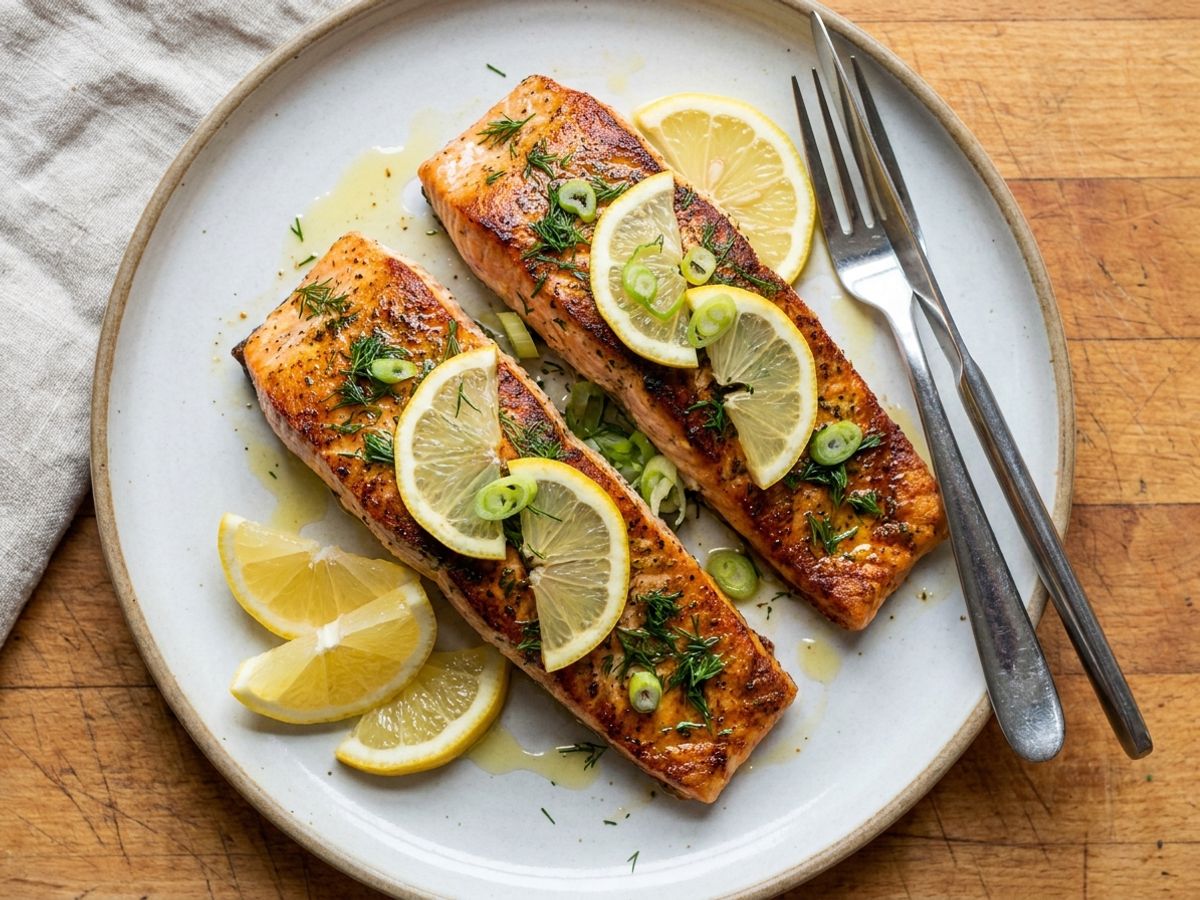
Ingredients
- 2 salmon fillets (about 150g / 5 oz each), skin on, patted dry
- 1 tbsp garlic-infused olive oil
- 1/2 tsp fine sea salt
- 1/4 tsp freshly ground black pepper
- 1 tbsp fresh dill, chopped, plus a little more for serving
- 1/2 lemon: a few thin slices for cooking, the rest cut into wedges
- 1 tbsp scallion (spring onion) GREEN tops only, thinly sliced (optional, for garnish)
Instructions
Season the fillets
- Pat the salmon completely dry with paper towels. Dry fish crisps better and browns instead of steaming.
- Brush both sides of each fillet with the garlic-infused oil, then season the flesh side with the salt and pepper.
- Press the chopped dill onto the top of each fillet so it holds during cooking.
Air fry
- Preheat the air fryer to 400°F (200°C) for about 3 minutes. Line the basket with a small piece of parchment or a light brush of oil so the skin does not stick.
- Place the fillets skin side down in a single layer, leaving space between them. Lay a thin lemon slice on top of each.
- Cook for 7 to 9 minutes, depending on thickness. Salmon is done at an internal temperature of 145°F (63°C) at the thickest part, where the flesh flakes easily. Thin fillets may finish closer to 7 minutes.
Finish
- Let the salmon rest in the basket for 2 minutes so the juices settle.
- Squeeze a lemon wedge over each fillet, scatter with the extra dill and the scallion green tops, and serve with more wedges on the side.
Tips & Substitutions
- No air fryer. Roast the seasoned fillets on a lined tray at 425°F (220°C) for 10 to 12 minutes, to the same 145°F (63°C) internal temperature.
- Skin on or off. Skin-on fillets hold together better in the basket and lift off the skin cleanly once cooked. Skinless works too; add the parchment liner to prevent sticking.
- Make the garlic oil yourself. Warm oil gently with smashed garlic cloves, then strain the cloves out completely so only the oil-soluble flavor remains. Keep it refrigerated and use within a few days.
- Swap the herb. Chopped parsley or the green tops of chives stand in for dill and are both low FODMAP. Keep chives to the green blades.
- Frozen fillets. Thaw fully in the fridge and pat very dry before seasoning, or the fish will steam and the skin will not crisp.
- Skip bottled marinades. Most contain onion or garlic powder. Lemon, oil, salt, and dill do the same job without the added FODMAPs.
 Join the waitlist
We're building a Low FODMAP Recipes app. Add your email and we'll let you know when it launches.
Why This Works
- Garlic flavor without the fructans. Garlic's FODMAPs (fructans) are water soluble, not oil soluble, so infused oil carries the taste while leaving the fructans behind in the discarded cloves.
- Salmon has no FODMAPs. Plain fish is protein and fat with nothing to portion-cap, which makes it a reliable base on the diet.
- Lemon and dill stay low. Fresh lemon juice and dill are low-FODMAP in normal recipe amounts, so they add brightness without stacking FODMAPs.
- Scallion greens only. The green tops of scallions are low FODMAP; the white bulb holds the fructans, so use just the green blades for that oniony note.
Storage
Refrigerate leftover salmon in an airtight container for up to 3 days. Reheat gently in the air fryer at 320°F (160°C) for 3 to 4 minutes, or eat cold flaked over salad. Cooked salmon freezes for up to 2 months; thaw in the fridge overnight before reheating. Look up any sides you pair with it in the FODMAP Foods app to see how their ratings change with portion size.
Not sure about an ingredient?
Our low FODMAP food list rates 600+ foods low, moderate or high, with the serving size behind each rating, so you can check any ingredient or swap in this recipe before you make it.
For educational purposes only. Not medical advice. Consult a healthcare professional for personal guidance.
References
- All about onion, garlic and infused oils on the Low FODMAP Diet — Monash University FODMAP Blog
- Garlic-infused oil — Kate Scarlata, RDN
- Safe Minimum Internal Temperature Chart — USDA Food Safety and Inspection Service