Low FODMAP at Work: Lunches, Meetings, and Office Snacks
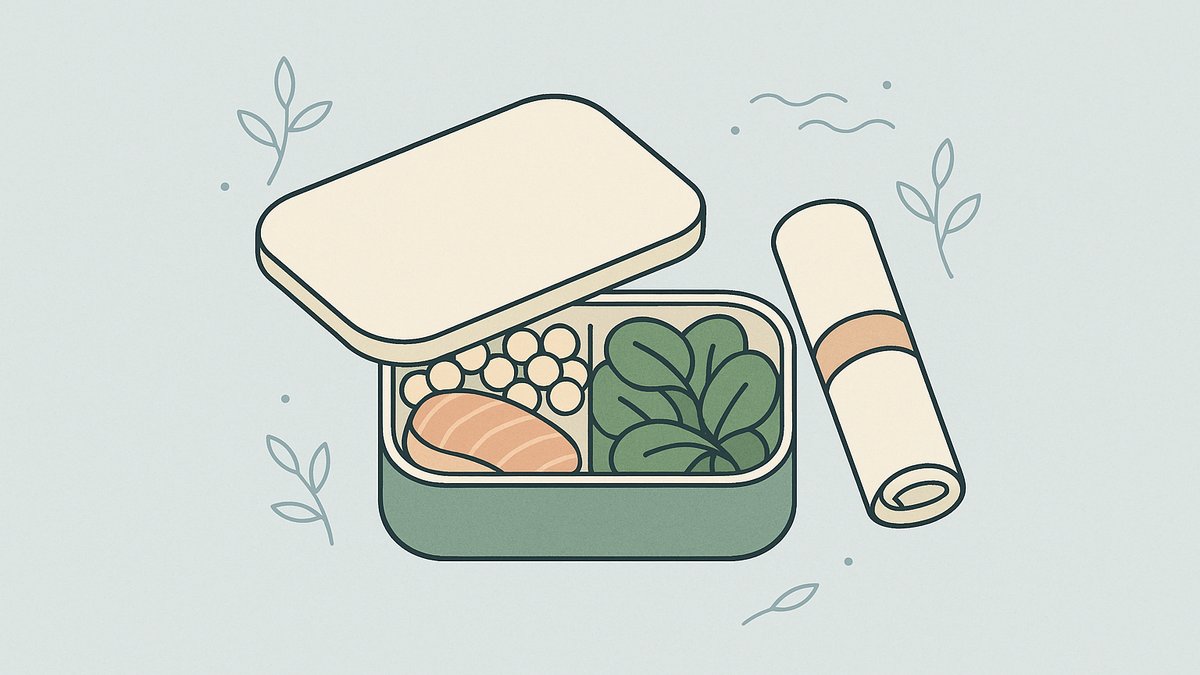
Work is where the low-FODMAP diet quietly falls apart. Weekends are fine, dinner is dialed in, and then Monday arrives with a catered meeting, free bagels, and a coworker's homemade coffee cake on the counter. Five days a week of that, and "just this once" becomes three times a week.
The fix is logistics, not willpower. Pack your lunch, stock a drawer, keep two or three short scripts ready, and the office stops being a minefield.
Lunches: three formats that survive a commute
Home-packed lunches solve 80 percent of the weekday problem. You know every ingredient, you control the portion, and you're not staring at a sandwich menu at 12:45 wondering if the "house vinaigrette" has garlic in it (it does).
Pick one format and rotate. All three assume a Sunday prep session. If you haven't built one, start with low-FODMAP meal prep.
Salad jars. Layered in a wide-mouth quart mason jar, bottom to top: dressing (¼ cup garlic-infused oil vinaigrette), hard vegetables (cucumber, bell pepper, carrot, cherry tomato), grain or protein (½ cup quinoa, 100 g grilled chicken, hard-boiled egg), soft toppings (feta or cheddar, pumpkin seeds), and leafy greens on top. The dressing stays away from the greens until you invert the jar at lunch. Keeps four days if the greens are dry when packed. Water on leaves is why salad jars get slimy by Wednesday.
Grain bowls. Same base, warm, in a clip-lid glass container. Rice or quinoa on the bottom, roasted vegetables and protein in the middle, a dressing cup on the side. Microwave the bowl without the dressing, add it after. Roasted carrot, zucchini, bell pepper, and potato all reheat well.
Leftover meal-prep. The easiest format. Whatever you cooked Sunday, in a single container, portioned. The trick is portioning before you get hungry, not scooping at 10 PM when everything looks like "one serving."
A few rules. Don't use foil-lidded supermarket salads as your default; the bagged dressings almost all contain onion or garlic powder. And don't skip the dressing. A dry grain bowl at lunch is where people quit packing by week three.
USDA guidance is that cooked food keeps three to four days in the fridge at 40°F or below, so Sunday prep realistically covers Monday through Thursday lunch, not Friday. Plan Friday differently: leftovers from Thursday night, or a known-safe order from a regular spot (see eating out low FODMAP).
Meetings with catered food
Catered lunches are where workdays get hard. The meeting is on the calendar, food is "provided," and the spread is wheat sandwiches with garlic aioli, a pasta salad built on Italian dressing, and a fruit plate that turned out to be mostly watermelon and apple. Two of those three are high FODMAP.
A few moves that work:
RSVP with a dietary note. Most calendar invites have a dietary-restrictions field. Fill it in. "No onion, no garlic, no wheat" is specific enough for a caterer and vague enough to avoid a FODMAP lecture. Most will ship a plain grilled chicken or fish plate if you ask in advance.
Bring a backup. If you couldn't RSVP or the meeting is a surprise, pack a lunch anyway and eat it at your desk before or after. The spread stays for others, you eat what you brought, nobody notices.
Work the buffet. Standing at the catering table with a paper plate and no prior notice, the order is: plain protein first (sliced turkey, grilled chicken, hard cheese, hard-boiled eggs), then plain rice or potatoes if available, then low-FODMAP produce (grapes, strawberries, cucumber, carrot sticks, bell pepper strips). Skip dressings, dips, pasta salads, and bread. You can usually assemble a fine meal from the edges if you ignore the center.
A short script when someone asks why you're skipping the pasta salad: "I've got a food sensitivity, I brought my own." You don't owe anyone an explainer. If they push, "onion and garlic give me stomach trouble" closes the conversation.
 Get the free Beginner's Guide to the Low FODMAP Diet
Learn what FODMAPs are, which foods to watch, and how to start finding your personal triggers. Plus practical tips and new recipes by email.
The snack drawer
A stocked desk drawer is the single highest-return low-FODMAP investment at work. It handles the 3 PM slump, the unexpected late meeting, and the "I skipped lunch and now I'm starving" moments that otherwise send you to the vending machine or the office kitchen.
A good stock list, in individually portioned form:
- Rice cakes. Plain, salted, or caramel (check caramel for added inulin or apple).
- Single-serve peanut butter packets. 2 tablespoons is a low-FODMAP serve. Plain peanut, not "almond butter with inulin."
- Hard cheese. Cheddar, swiss, parmesan, and brie are low FODMAP at standard serves because aged cheeses are essentially lactose-free. Weigh to the Monash serve.
- Fruit. A firm (green-tipped) banana, a small orange, a small bunch of grapes, or a kiwi. Monash rates firm bananas and ripe bananas differently, so they aren't the same portion.
- Measured nuts. Small zip bags weighed to the Monash serve for almonds, pecans, or macadamias. Straight-from-the-bag is how FODMAP stacking sneaks up on you.
- Pumpkin seeds. Measured to the Monash serve; they don't need refrigeration.
- Plain potato chips or popcorn. Plain-salted, not "sour cream and onion," not "garlic parmesan."
- Dark chocolate. Plain 70 to 85 percent bars, measured to the Monash serve. Skip anything with inulin, chicory root, or sugar alcohols.
- Lactose-free yogurt cups if you have fridge access. Plain, no inulin, no fruit purée.
Cross-reference low-FODMAP pantry staples for the full list. The overlap is most of it.
Pre-portioning matters because you will eat the bag. You won't eat "a small handful" from an open bag, you'll eat the bag. Small zip bags make the portion visible. This is the difference between a drawer that supports your diet and one that causes three flares a month.
The office coffee trap
Shared office coffee machines are a surprising source of FODMAP exposure. Not the coffee. Black coffee and espresso are low FODMAP. The problem is the milk.
Most offices stock an oat milk, an almond milk, or both. Oat milk is the trap. Many commercial oat milks contain chicory root, inulin, or large oat portions that push them high FODMAP at typical cup sizes. Some brands make a Monash-certified low-FODMAP version, but the barista-style cartons on the office counter are almost never the certified one. Full breakdown in is oat milk low FODMAP.
Working options:
- Black coffee or espresso. Low FODMAP. (Caffeine and acidity can still trigger IBS symptoms; gauge your own response.)
- Lactose-free milk. Bring a small carton and label it. Low FODMAP at a standard cup.
- Almond milk. Low FODMAP up to the Monash serve; check labels for inulin. A full mug-sized pour can push past the limit.
- A small splash of half-and-half. Lactose is the limiter. Keep pours small.
Avoid flavored creamers (most contain inulin or HFCS), the office oat milk by default, and sugar-free creamers with sorbitol or xylitol.
The cake in the break room
Nobody has a clean answer for this one. A coworker brings in a homemade cake. Someone's birthday. A farewell. A Friday pastry tray. It's free, and everyone else is eating it.
A few options, in rough order of safety:
Skip it, have a planned treat. Eat a pre-portioned piece of dark chocolate or a rice cake with peanut butter at your desk. Out of sight matters more than willpower.
Have a small bite if you're in reintroduction or personalization. If you've already tested fructans and wheat and know your threshold, one small slice might fit. That only applies after the challenge phase. See how to do a fructan challenge. During strict elimination, skip it.
Have a bite, track it, accept the symptoms. Sometimes the social cost of declining is higher than the symptom cost. A birthday for a close coworker, a goodbye. Eat a small piece, log it, plan a calmer food day tomorrow. The diet is a long-term framework, not a daily pass-fail test. If saying no every day is starting to feel heavier than the symptoms, that's a low FODMAP burnout signal.
Take a slice back to your desk and don't eat it. Sounds dumb, works great. Grab a plate, join the gathering, chat, the plate goes back to your desk, you quietly toss it later.
The move that reliably goes wrong is "I'll just have a little" without a plan. A little turns into a whole slice, garlic bread at a team dinner that week turns into three days of bloating, and you're tracking backward from a flare trying to identify the exposure.
The tracker advantage
Work exposures are where a food log earns the effort. Catered meetings, shared coffee, break-room food: you don't always control ingredients. Logging what you ate, when, and how you felt six to 24 hours later turns "no idea what set this off" into a pattern after a few weeks.
FODMAP Foods is built for this. Scan a catered dish, barcode, or ingredient label for an instant Low, Moderate, or High FODMAP verdict, ask the AI whether a break-room snack fits, or search the low FODMAP food list before you commit. You'll learn which settings work for you and which ones need a backup lunch in the drawer.
Get the free Beginner's Guide to the Low FODMAP Diet
Learn what FODMAPs are, which foods to watch, and how to start finding your personal triggers. Plus practical tips and new recipes by email.
Scan any food, search 1,000+ FODMAP ratings, and know your safe portion with FODMAP Foods.


Related articles





For educational purposes only. Not medical advice. Consult a healthcare professional for personal guidance.
References
- Low FODMAP Meal Planning — Monash FODMAP
- Eating out on the low FODMAP diet — Monash FODMAP
- Low FODMAP Snacks On The Go — Monash FODMAP
- Leftovers and Food Safety — USDA Food Safety and Inspection Service
- Getting Started on the Low FODMAP Diet: Elimination Phase — A Little Bit Yummy