IBS vs. IBD: How to Tell the Difference
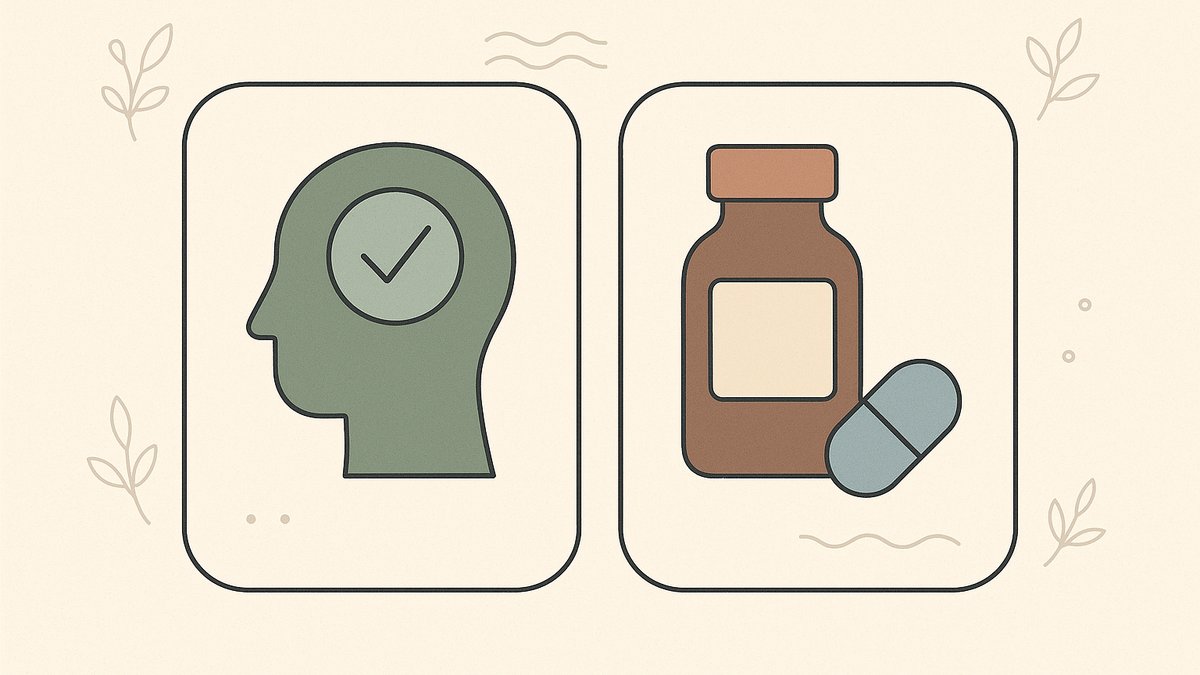
IBS and inflammatory bowel disease (IBD) look similar on the surface and behave as completely different diseases underneath. One is a functional disorder with no tissue damage. The other is immune-mediated inflammation that can scar and damage the gut over time. Mistaking one for the other can cost years.
The low-FODMAP diet is well validated for IBS, but FODMAPs are a symptom-management tool, not a treatment for inflammation. If you have IBD, diet tweaks alone are not enough. A gastroenterologist, the right imaging and labs, and in most cases medication are what keep the disease from damaging the gut over time.
This post covers how to tell the two apart, what the red flags look like, and where the low-FODMAP diet fits in when an IBD diagnosis is already in place.
The one-line difference
- IBS (irritable bowel syndrome) is a functional disorder. No structural disease explains the symptoms, but the gut doesn't behave normally. Pain, bloating, altered stools, gut-brain feedback loops, visceral hypersensitivity.
- IBD (inflammatory bowel disease) is immune-mediated inflammation causing real, visible tissue damage. The two main forms are Crohn's disease and ulcerative colitis. Biopsies show inflammation. Scopes show ulcers. Blood work often shows elevated inflammatory markers.
One disease changes how the gut feels. The other damages the gut itself.
What IBS looks like
IBS is diagnosed using the Rome IV symptom criteria, with targeted testing to rule out other conditions when red flags or risk factors are present. Roughly 10 to 15 percent of adults globally meet criteria. The core pattern is abdominal pain tied to bowel habits, present for months, without a structural explanation.
Typical features:
- Bloating, cramping, gas
- Diarrhea, constipation, or alternating between the two
- Symptoms that flare after meals and during stress
- Symptoms that improve after a bowel movement
- No blood in stool, no fever, no unintended weight loss
- Normal inflammatory markers (CRP, fecal calprotectin)
- Normal colonoscopy
For a broader look at whether FODMAPs are even part of the puzzle, What Are FODMAPs? walks through the basics. If the main complaint is bloating that won't quit, Why Your Bloating Won't Go Away covers the broader differential. Much of what people call "IBS bloating" is a mix of visceral hypersensitivity and fermentation, covered in Visceral Hypersensitivity Explained.
 Get the free Beginner's Guide to the Low FODMAP Diet
Learn what FODMAPs are, which foods to watch, and how to start finding your personal triggers. Plus practical tips and new recipes by email.
What IBD looks like
IBD is a different beast. Crohn's disease can affect any part of the digestive tract, from mouth to anus, and typically hits in patches that extend through the full thickness of the bowel wall. Ulcerative colitis is limited to the colon and rectum and affects the inner lining in a continuous pattern. Both are immune-mediated, both are chronic, and both cause measurable inflammation that shows up on labs, imaging, and biopsy.
Typical IBD features that do not appear in plain IBS:
- Blood in the stool. Visible red blood, dark blood, or a positive fecal occult blood test. This is a major red flag. IBS itself does not cause GI bleeding.
- Unintended weight loss. Dropping pounds without trying, especially alongside diarrhea, is not an IBS pattern.
- Night-time diarrhea. Waking up from sleep to go to the bathroom. IBS symptoms usually track the day and quiet down overnight. Nocturnal diarrhea is an IBD red flag.
- Fever. Low-grade or spiking. IBS is not an inflammatory disease and does not cause fever.
- Persistent elevated inflammatory markers. CRP, ESR, and fecal calprotectin are usually normal in IBS. In active IBD they are commonly elevated, and fecal calprotectin in particular has become a standard screen for distinguishing the two before scoping. A single normal CRP doesn't rule out IBD, which is why calprotectin plus scoping matter when red flags are present.
- Extra-intestinal symptoms. Joint pain, eye inflammation (uveitis, episcleritis), skin issues (erythema nodosum, pyoderma gangrenosum), mouth ulcers, or liver problems. These show up in IBD because it's a systemic autoimmune condition.
- Anemia or nutrient deficiencies. From blood loss, malabsorption, or inflammation itself.
- Perianal disease. Fistulas, fissures, or abscesses around the anus, particularly with Crohn's.
The Crohn's & Colitis Foundation and Cleveland Clinic both list these as the classic alarm features. Any of them should be a prompt to see a gastroenterologist soon.
The red flags, plainly
Any of the following warrant booking a GI appointment instead of optimizing a diet:
- Blood in the stool, on the toilet paper, or in the bowl.
- Weight loss without trying.
- Waking up from sleep to have diarrhea.
- Unexplained fevers alongside gut symptoms.
- CRP or fecal calprotectin elevated on more than one test.
- A first-degree relative with Crohn's or ulcerative colitis, paired with changing symptoms.
- New-onset gut symptoms after age 50.
- Symptoms getting worse over months, not better.
None of these are automatic IBD diagnoses. Infections, celiac disease, microscopic colitis, diverticular disease, and other things can mimic pieces of the IBD picture. That is exactly why a proper workup exists. A gastroenterologist will typically order blood work (CBC, CRP, ESR, ferritin), fecal calprotectin, stool studies to rule out infection, celiac serology, and then imaging or colonoscopy with biopsy as indicated.
Delayed IBD diagnosis is associated with more complications, more surgery, and worse long-term outcomes. The Crohn's & Colitis Foundation is blunt about this: early diagnosis and treatment change the trajectory of the disease.
How the overlap works
Plenty of IBD patients still have IBS-type symptoms even when their inflammation is controlled. Ulcerative colitis in remission, with a clean scope and normal calprotectin, can still come with bloating, cramping, gas, and misery after certain meals. The inflammation is quiet. The functional layer on top of it is still loud.
This overlap has a name in the literature (IBS-in-IBD or IBD-IBS overlap), and it is common. That is where the low-FODMAP diet has evidence in IBD.
Where low-FODMAP fits in IBD
A 2020 randomized trial by Cox and colleagues, published in Gastroenterology, looked at adults with quiescent (inactive) IBD who still had persistent gut symptoms. A four-week low-FODMAP diet significantly improved symptoms and quality of life compared with a control diet. It did not change inflammatory markers. That is the whole point.
Monash's own IBD coverage says the same thing: the low-FODMAP diet can help manage the IBS-type symptoms that linger in quiescent IBD, but it is not a treatment for inflammation and should be done with a dietitian when the underlying disease is well controlled.
The right framing:
- Active IBD flare: work with your GI team on medication and nutrition. This is not the moment for a restrictive elimination diet on your own.
- IBD in remission with ongoing gut symptoms: low-FODMAP is a reasonable tool to try, ideally with a FODMAP-trained dietitian, to manage bloating, gas, and cramping. Get back to a normal diet through structured reintroduction.
- IBD with new or worsening symptoms: don't assume it's a FODMAP issue. Call your GI. New symptoms can mean a new flare, and an early response matters.
For sorting out whether symptoms point to IBS, SIBO, or something else entirely, Is It IBS, SIBO, or Histamine Intolerance? walks through the differential for people who have already had IBD ruled out.
What to ask your doctor
If an IBS label has been handed over but something feels off, these are reasonable questions to bring to an appointment:
- Can we do a fecal calprotectin test to screen for bowel inflammation?
- Can we run CRP and a CBC to look for inflammation and anemia?
- Have we ruled out celiac disease?
- Given my symptoms, do I meet criteria for a colonoscopy?
- If my calprotectin is elevated, what's the next step?
A good GI will welcome these questions. IBS is supposed to be a diagnosis made after other things have been considered, not a shrug when tests haven't been ordered. For a step-by-step script for that conversation, see how to talk to your doctor about IBS.
The bottom line
IBS is real, treatable, and the low-FODMAP diet works for most people who do it properly. The diagnosis only belongs to you once the red flags have been checked and cleared.
Blood in stool, unintended weight loss, night-time diarrhea, fevers, or persistent elevated inflammatory markers are not an IBS pattern. Self-managing that with diet is the wrong move. A proper GI workup comes first, ruling out IBD and the other mimics. Once symptoms are confirmed functional, the FODMAP work makes sense.
Diet is powerful for functional gut disorders. It is not a substitute for a diagnosis.
Get the free Beginner's Guide to the Low FODMAP Diet
Learn what FODMAPs are, which foods to watch, and how to start finding your personal triggers. Plus practical tips and new recipes by email.
Scan any food, search 1,000+ FODMAP ratings, and know your safe portion with FODMAP Foods.


Related articles





For educational purposes only. Not medical advice. Consult a healthcare professional for personal guidance.
References
- Overview of Crohn's Disease — Crohn's & Colitis Foundation
- Irritable Bowel Syndrome (IBS) — Johns Hopkins Medicine
- Inflammatory Bowel Disease — Cleveland Clinic
- Efficacy of the Low FODMAP Diet for Treating Irritable Bowel Syndrome: The Evidence to Date — Nanayakkara et al. (2016), Clin Exp Gastroenterol
- A Diet Low in FODMAPs Reduces Symptoms in Patients With Quiescent Inflammatory Bowel Disease — Cox et al. (2020), Gastroenterology
- Low FODMAP diet and IBD — Monash FODMAP